Why Your Data Center Modernization Strategy Might Be Failing in 2026
 AI is radically changing data centers’ power needs, creating unprecedented challenges for modernization. The United States will just need 123 gigawatts of power for AI data centers by 2035, compared to 4 gigawatts in 2024. This massive increase signals a complete rethinking of data center operations.
The numbers paint a striking picture. Modern large data centers use electricity equivalent to 50,000 homes. GPU-filled racks now draw over 100 kW – far more than traditional server setups. U.S. data centers used more than 4 percent of the country’s total electricity in 2023. This number could climb to 9 percent by 2030. Many organizations don’t deal very well with these critical challenges.
Traditional modernization strategies might fail by 2026. Let’s get into the hidden obstacles that could derail your efforts and develop solutions that balance performance with sustainability. The global data center market will grow annually at over 11% through 2034. Success requires more than meeting rising demand.
Why data center modernization is more urgent than ever
Business leaders now face a pressing reality: traditional data centers struggle to keep up with modern computing needs. A 2024 survey shows that only 38% of CIOs and CTOs believe their company’s technology can support new business models. This gap between what we have now and what we’ll need has turned data center updates from regular upgrades into an urgent business priority.
The shift from traditional to AI-driven workloads
The computing world has changed at its core. Traditional data centers were built for predictable, moderate-density workloads that we used to move data north-south (users to servers). AI workloads create completely different traffic patterns where data moves east-west (servers talking to other servers) during training runs.
This change is huge in both size and needs. AI drives data center growth in the United States. Power capacity will grow from about 30 gigawatts in 2025 to 90 or more gigawatts by 2030—growing at 22% each year.
The technical differences stand out clearly:
-
Traditional server racks need 7-15 kW of power
-
AI training clusters need 40-100+ kW per rack
-
GPU-intensive AI workloads create much more heat than CPU-based systems
So, data centers need a complete redesign. Buildings now need stronger floors, higher ceilings, and special cooling systems to handle these high-density setups.
How 2026 is different from previous years
Several factors meet in 2026 to create an urgent need for data center updates:
AI workloads have grown from experiments into critical infrastructure. The difference between training and inference has changed how we deploy systems—inference workloads will grow bigger than training by 2030, taking up more than half of all AI compute and about 30-40% of total data center demand.
Power availability now limits new capacity growth and decides where organizations expand. This has led many companies to move toward tier 2 markets where they can get power 12-24 months faster and land costs 70% less.
The global data center market will grow over 11% each year through 2034. This growth happens while energy becomes scarce and regulations get stricter. Supply chain problems with critical minerals, semiconductors, and construction materials create new bottlenecks that weren’t big issues before.
The new definition of modernization
Data center updates in 2026 mean more than just new hardware. The changes now cover:
Adaptability for AI acceleration: Modern data centers must support specialized tools to build AI models that enable machine learning and deep learning. This includes the right infrastructure for both GPU clusters and integrated AI accelerators in CPUs.
Sustainability integration: Data centers might use up to 21% of global energy by 2030. Updates now need new thinking about power sources, cooling efficiency, and carbon impact from scratch.
Hybrid architecture optimization: Even with cloud growth, 46% of IT leaders choose a hybrid-by-design strategy that uses both on-site infrastructure and cloud resources based on specific workload needs.
Data centers face more infrastructure challenges. As computing power gets packed into smaller spaces, they need aggressive cooling technologies—many using water from stressed areas. Liquid cooling has changed from experimental to essential for high-density AI setups.
Today’s AI compute splits between training and inferencing workloads, so update strategies must plan for both. Training needs large-scale, high-density sites with advanced MEP systems. Inference workloads need locations optimized for low latency, strong network connections, and energy efficiency.
Where most strategies go wrong
Organizations often rush into data center modernization without a detailed strategy. This leads to costly mistakes that leave critical infrastructure unable to handle today’s workloads.
Focusing only on hardware upgrades
Hardware upgrades alone won’t fix performance issues. Companies spend big money on new equipment but don’t deal very well with basic infrastructure problems. Industry experts say successful modernization starts with a full picture of your infrastructure. You must know your environment inside out – from workload patterns to storage dependencies. Even advanced hardware additions won’t help without this knowledge.
These scattered technology investments create weak points across data centers. The result is poor operations and higher risks that ended up hurting performance. Teams often prioritize computing power without thinking about how new systems work with existing infrastructure or affect energy use.
Neglecting energy and cooling infrastructure
Cooling and power infrastructure is the biggest problem many modernization plans overlook. Cooling systems use 30-40% of a data center’s total electricity. AI and high-performance computing have pushed power needs through the roof. While 15 kilowatts per rack used to be high, modern systems now need up to 200 kilowatts per rack.
This massive increase creates major challenges:
-
Power density per rack will jump from 20 kW to an incredible 600 kW
-
More powerful processors generate more heat, even with good cooling
-
Many buildings have physical limits that can’t handle these thermal loads
Teams might need to shut down hardware or stop migration completely until they install bigger cooling units. Oversized cooling systems that cycle too quickly waste energy and don’t last as long.
Lack of integration with utility and grid planning
The third major mistake happens when teams don’t work with utility providers and grid planners. Data centers affect regional power grids in unique ways. Yet many modernization plans move forward without thinking about:
-
Connection limits and queue positions
-
Power line planning that takes longer than building data centers
-
Different rules across locations
The National Council of State Legislatures says the US needs up to $2 trillion for grid updates by 2030 just to keep power reliable. Still, many organizations create expansion plans without checking grid capacity limits or connection studies that could delay projects for months or years.
Smart organizations take a different approach. They use grid-aware strategies with flexible connections and agreements that let them run partially while waiting for full power capacity.
Hidden challenges that derail modernization efforts
Data center modernization projects often fail despite careful planning. Several hidden obstacles can derail these initiatives and create devastating effects on timelines, budgets, and success rates.
Unseen costs of interconnection delays
A critical bottleneck exists between data center and electrical grid timelines. A typical greenfield data center needs 2-3 years to develop, but the grid infrastructure upgrades take 4-8 years to complete. Many facilities end up stranded – they’re built but can’t operate at full capacity.
Developers in Northern Virginia wait up to seven years to get adequate power connections. Data centers sit partially idle while waiting for additional power capacity. This extends ROI timelines and creates unexpected operating costs.
Permitting and regulatory bottlenecks
No standardized framework exists for data center approval, and permitting processes vary across jurisdictions. Since 2023, local opposition and permitting challenges have led to cancelation or delay of U.S. data center projects worth $64 billion.
Local resistance continues to grow. At least 142 grassroots advocacy groups in 24 states actively oppose data center developments. These groups worry about noise pollution, water usage, grid strain, and changes to their neighborhood’s character.
Mismatch between compute and cooling capabilities
Traditional cooling systems struggle with AI workloads’ unprecedented thermal challenges. Modern AI processors generate 300-500% more heat than conventional servers. This redefines the limits of facility design parameters. High-performance computing hardware reaches densities of 30-100+ kilowatts per rack – nowhere near what traditional air-cooled systems can handle.
Cooling infrastructure requires massive water resources. U.S. data centers will use between 16-33 billion gallons of water annually by 2028. Many facilities get approval without detailed, long-range water consumption forecasts.
Talent shortages in critical roles
Finding and keeping specialized workers to build and run modern data centers remains challenging. More than half of data center operators can’t find qualified staff, while 42% struggle to keep their core team amid fierce competition.
This shortage affects multiple disciplines – from network engineers to cooling specialists. Companies expect the biggest talent gaps among IT technicians and workers skilled in cloud computing and AI applications. New technologies like AI reshape job requirements, and up to 80% of workers might see changes in at least 10% of their daily tasks.
What a successful modernization strategy looks like
Data center modernization needs detailed strategies that go beyond simple technology upgrades. Leading organizations know that modernization must tackle both current computing needs and future sustainability goals.
Lining up with long-term energy planning
Smart modernization strategies put energy at their core. Smart organizations now work directly with utility providers during planning to ensure they have enough power. Their approach includes:
-
Adding renewable energy sources like solar or wind to lower carbon footprint and show environmental commitment
-
Learning about alternative energy solutions such as small modular reactors and behind-the-meter generation where grid capacity is limited
-
Using energy efficiency initiatives that cut operational costs and reduce environmental impact
Energy planning has become part of data center strategy. This marks a radical alteration from old approaches that saw power as just an operational issue rather than a strategic need.
Designing for modularity and scalability
Modular design has become the life-blood of modern data centers, especially when AI-driven workloads create unpredictable growth. Organizations now use:
Expandable infrastructure that grows without disrupting operations to protect future investments
Pre-fabricated modules built off-site and connected with standard interfaces for power, cooling, and networking
Containerized designs that make relocation or reconfiguration easier as needs change
This modular approach lets organizations match their spending with actual usage. It prevents waste while supporting step-by-step investments.
Incorporating carbon-aware computing
Carbon-aware computing adjusts workloads based on available clean electricity. Google shows how this works through:
A carbon-intelligent platform that checks grid carbon intensity forecasts against expected data center power needs
Workload adjustment features that move computing tasks to times and places with abundant clean energy
Smart scheduling of computational tasks when low-carbon electricity is available
These strategies work well. Google avoided purchases that would have created about 260,000 metric tons of CO2e in 2024.
Building in observability and automation from day one
Success depends on detailed visibility across the entire data center ecosystem. Top organizations now use:
Unified observability platforms that connect separate data sources and turn scattered information into applicable information
Automated troubleshooting systems that cut problem detection and resolution time by up to 45%
AI-powered infrastructure management that handles millions of daily alerts with 99.998% efficiency
These tools deliver real results. Organizations see 25% fewer major incidents and better change management processes.
Emerging solutions and innovations to watch
Data centers are changing faster than ever with new technologies that deal with basic problems of old systems. These breakthroughs reshape what data centers can achieve today.
Liquid and immersion cooling systems
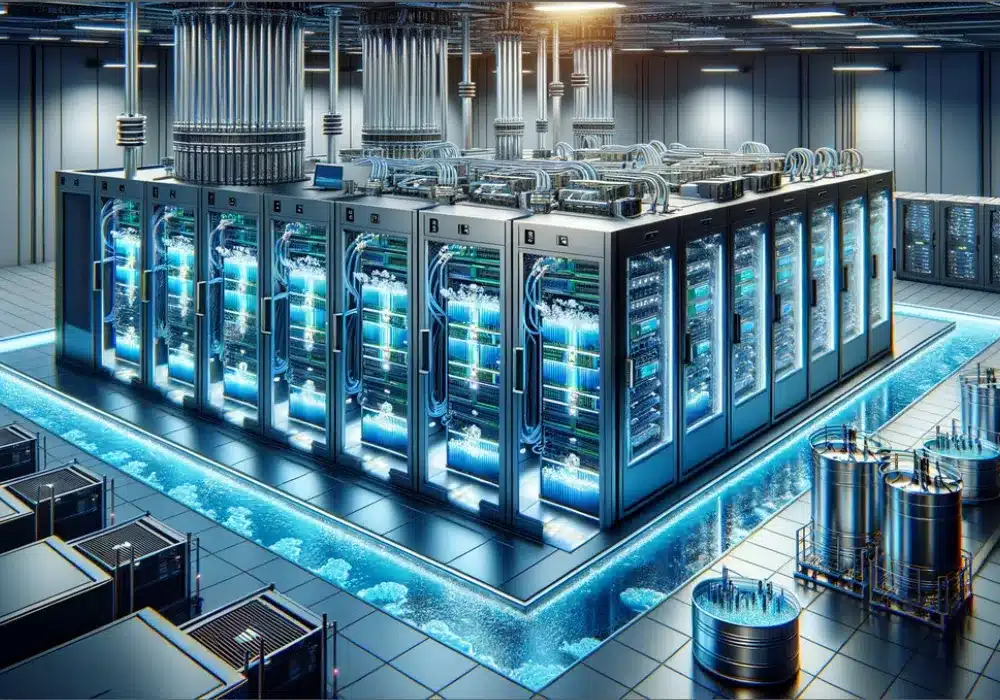
Power density per rack now pushes toward 100kW and beyond. This makes liquid cooling a must-have rather than just an option. Modern cooling systems submerge IT components directly in dielectric fluid and absorb heat more effectively than air. The system cuts energy use by 30-40% compared to old cooling methods. Rack densities can reach up to 380kW. Single-phase immersion systems achieve PUE ratios between 1.05-1.10. This is a big deal as it means that traditional data centers’ average of 1.58 is nowhere near as efficient.
Small modular nuclear reactors (SMRs)
SMRs provide a fascinating answer to data centers’ huge power needs. Nuclear power delivers reliable round-the-clock energy with minimal carbon emissions. The physical footprint is remarkably compact – 360 times smaller than wind farms and 75 times smaller than solar installations. Several projects are already moving forward. Plans include 24 SMRs in Ohio and Pennsylvania that will generate 1.8GW of power specifically for nearby data centers.
Grid-enhancing technologies (GETs)
GETs make the most of existing power infrastructure through specialized devices and analytical tools. Advanced Power Flow Control (APFC) technologies like SmartValve™ adjust reactance on the fly. This balances power distribution and reduces grid congestion. These innovations help power companies optimize their systems with live data and ensure reliable power delivery even during peak times.
AI-driven infrastructure management platforms
AI now forms the backbone of modern data center management. AI-powered platforms analyze live data, spot patterns, and make automatic adjustments. This moves operations from reactive to proactive approaches. The systems handle millions of daily alerts quickly while cutting major incidents by up to 25%.
Flexible data center siting and colocation models
New siting models offer alternatives to traditional grid connections. Research shows that site-level flexibility can speed up data center connections by 3-5 years. These approaches combine on-site power solutions with flexible connection agreements. Data centers can run partially while waiting for full capacity.
Conclusion
Data center modernization faces a crucial turning point as we approach 2026. This piece shows why traditional approaches don’t deal very well with the exponential growth in power that AI workloads need. Companies that stick to outdated modernization playbooks will without doubt fall behind as rack densities reach 100kW and beyond.
Substantial challenges lie ahead. AI facilities’ power requirements could multiply thirtyfold by 2035. Cooling systems can’t manage unprecedented heat loads. Grid constraints, regulatory hurdles, and talent shortages create hidden obstacles that many companies fail to see coming. These issues and the mismatch between data center and electrical grid timelines make modernization nowhere near as simple as hardware upgrades.
Success needs a fundamental change. Smart organizations now arrange their strategies with long-term energy planning and design for modularity from scratch. They welcome carbon-aware computing and build complete observability into their infrastructure. This integrated approach recognizes that modern data centers must balance performance requirements with sustainability concerns.
Advanced technologies reshape possibilities, and we need to monitor them closely. Liquid cooling systems, small modular reactors, and grid-enhancing technologies provide promising solutions to current limits. As with AI-driven management platforms, they revolutionize operations from reactive to proactive and handle millions of daily alerts efficiently.
The way forward just needs thoughtful integration of these solutions with careful planning among utility providers, regulators, and local communities. Data centers will keep growing remarkably. Success belongs to those who see that modernization reaches way beyond the reach and influence of servers and switches—it needs a reimagining of the power, cooling, talent, and technology ecosystem. Companies that adopt this complete approach today will build the strong digital infrastructure needed to power our AI-driven future.